Choose Hard Pressed Graphics if you want existing Altadena/Dena-themed apparel; choose Bonfire if you want to create and sell custom apparel through a fundraising campaign. The deciding factor in 2026 is whether you are shopping for a community design or organizing a campaign of your own.
- Hard pressed graphics vs bonfire is a retailer-versus-platform comparison: buy an existing design or organize your own campaign.
- Hard Pressed Graphics is the better apparel choice for shoppers seeking existing Altadena/Dena designs.
- Bonfire is the better fit for organizers creating custom fundraising apparel.
- A recovery-themed shirt is not proof of a donation; check the beneficiary and contribution terms before purchasing.
Why this matters
A clothing retailer and a fundraising platform solve different problems. A retailer gives you an existing collection to shop; a fundraising platform gives an organizer a way to sell apparel around a chosen message or cause.
Confusing those roles creates the wrong expectations. A shopper does not need campaign-management tools to choose a local shirt, while an organizer needs more than a design that happens to mention the same community.
Decide whether you are buying or organizing before comparing garments. That distinction matters more than the platform name printed on a checkout page.
At a glance
| Dimension | Hard Pressed Graphics | Bonfire |
|---|---|---|
| Best for | Shoppers seeking existing Altadena/Dena apparel | Organizers creating custom apparel campaigns |
| Design control | Choose from the brand's existing designs | Create a design for your own campaign |
| Local relevance | Altadena/Dena is an explicit focus | Local relevance comes from the individual campaign |
| Fundraising role | Apparel brand serving community members and recovery supporters | Platform for creating and selling fundraising apparel |
| Product selection | T-shirts, hoodies, hats, totes, tumblers, and notebooks | Evaluate the garments offered by the specific campaign |
| Fit and quality | Judge the individual garment | Judge the individual garment |
| Pricing model | Retail product purchase | Apparel purchase connected to a seller's campaign |
| Standout feature | Existing place-specific designs | Tools for organizing a custom apparel campaign |
The table compares buying paths, not identical shirts. Neither a community theme nor a fundraising platform establishes fabric quality, fit, or the financial impact of a purchase.
Existing designs win for shoppers; campaign tools win for organizers
Best for local apparel shoppers: Hard Pressed Graphics. The brand sells Altadena/Dena-themed clothing and accessories, so your starting point is an existing collection rather than a blank design project.
That is the useful distinction when you want to wear a place name, choose a community message, or buy a gift connected to Altadena. You can focus on the design and garment instead of deciding how to launch a campaign.
Best for campaign organizers: Bonfire. Its custom-apparel fundraising model fits someone who wants to put a particular message on a shirt and sell it through a campaign.
The tradeoff is responsibility. Choosing a campaign platform does not choose your message, explain your cause, or establish trust with supporters. Those are decisions the organizer still needs to make.
For a 2026 purchase, write your goal in a short sentence: buy a shirt, support a named campaign, or organize apparel sales. Those are distinct jobs, even when every option involves a T-shirt.
Bonfire wins when you need control over the campaign design
Bonfire is the better starting point when the wording or artwork must belong to your own campaign. A school group, community organizer, or fundraising team has a different requirement from a shopper browsing finished designs.
For that organizer, the design is part of the campaign's identity. You need the message to match the purpose, and the campaign page needs to explain what supporters are joining.
An existing retail collection works differently. You choose a design the brand has already created; buying that design is not the same as commissioning a custom campaign.
- Choose an existing design when its wording already says what you want to wear.
- Choose a custom campaign when you need your own message, artwork, or campaign identity.
- Do not assume customization simply because a retailer sells printed apparel.
Neither route is inherently more meaningful. The right choice is the one that lets you communicate the message you actually intend, without turning a straightforward purchase into an unnecessary project.
The Altadena-focused retailer wins for existing local messages
Hard Pressed Graphics apparel is the better fit for shoppers seeking existing Altadena/Dena designs. That focus is stated in the brand description and appears in named products, rather than depending on a campaign organizer to introduce the local connection.
For example, Altadena Not for Sale T-Shirt (Kids) carries the wording “ALTADENA NOT FOR SALE.” Altadena Lands T-Shirt (Kids) uses mountain imagery and the message “Let's keep Altadena Lands in Altadena hands.”
These are specific choices for someone who wants those messages on a child's shirt. They are not interchangeable with a generic community slogan, and their kids' sizing designation matters when selecting a gift.
The Altadena Lands T-Shirt (Kids) description specifies 100% cotton, preshrunk. That is a fact about that item, not evidence that every garment in the collection uses the same material.
Before choosing either design, check the individual garment's sizing and care details. The message can be right while the garment choice is wrong for its intended wearer.


Bonfire's local relevance comes from the campaign you select or create. Evaluate its wording and organizer rather than treating the platform name itself as proof of an Altadena connection.
Bonfire wins for organizing; neither name proves donation impact
Bonfire is the more appropriate choice when your job is to organize custom apparel fundraising. That is a different task from purchasing a finished garment from a retail brand.
However, choosing a fundraising platform does not answer every question about a particular fundraiser. The organizer, beneficiary, and explanation of how purchases support the cause still matter.
Likewise, an apparel brand serving wildfire-recovery supporters is not automatically promising that every order generates a donation. Community expression and a financial contribution are separate claims.
Use these 3 checks before treating a 2026 apparel purchase as a contribution:
- Beneficiary: Identify who is supposed to receive support.
- Contribution terms: Read how the purchase connects to that support.
- Organizer identity: Confirm who is making the commitment.
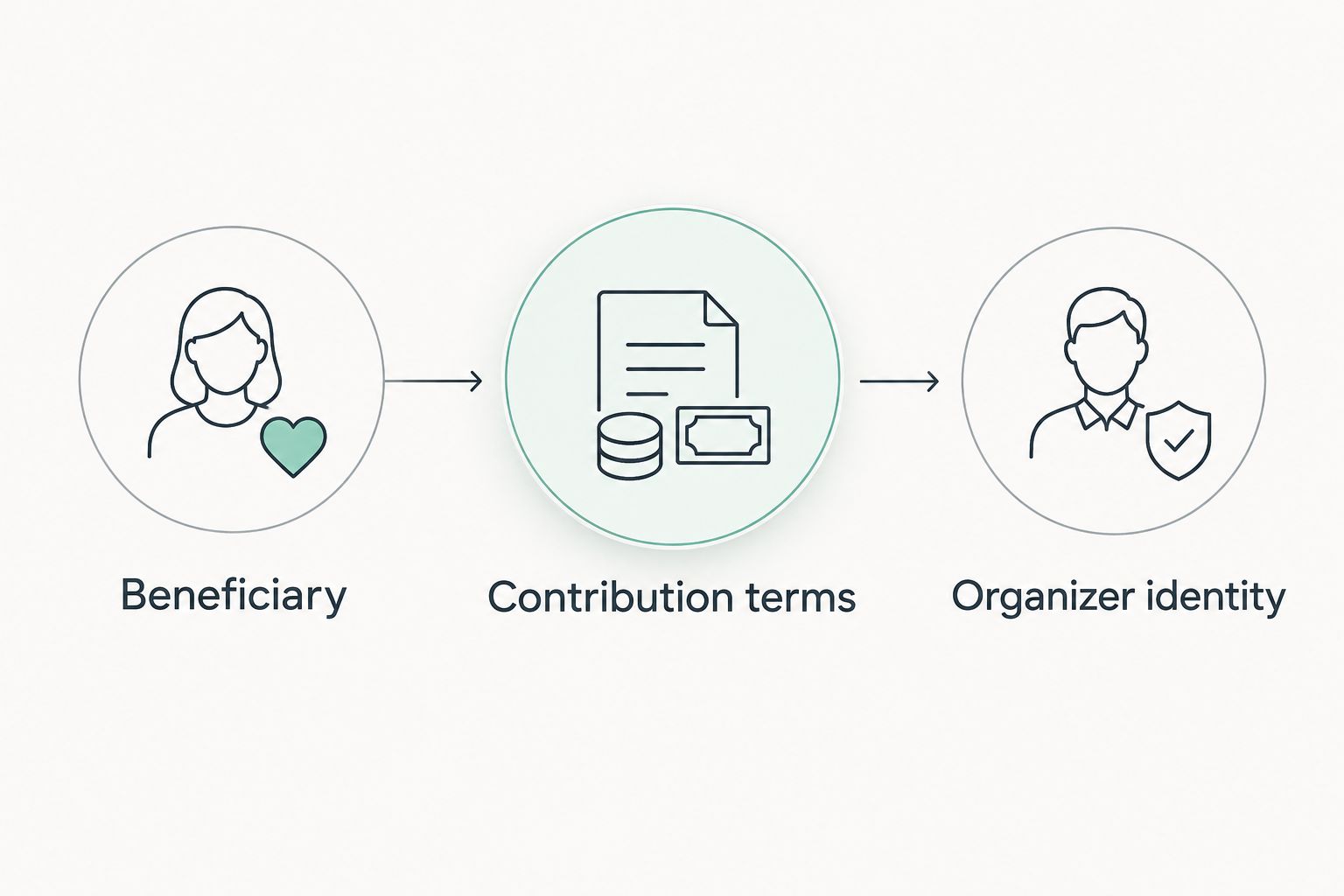
If your priority is expressing solidarity, choose wording that represents your intent. If your priority is directing money to a beneficiary, read the stated contribution terms before treating the purchase as support for that beneficiary.
The retailer wins for shopping across its stated categories
The brand's stated range includes T-shirts, hoodies, hats, totes, tumblers, and notebooks. That gives a shopper several product types to consider within the same Altadena/Dena-focused brand.
The practical advantage is choice of format. Someone who does not want another shirt can consider an accessory instead, without changing the basic purpose of the purchase.
The limitation is equally important: a category list is not a specification sheet. It does not establish materials, dimensions, care instructions, or that the same design appears across every product type.
For a Bonfire purchase, inspect the product choices attached to the particular campaign. A platform's purpose and a campaign's actual garment selection are different things.
Compare the item you can evaluate, not an imagined catalog. For gifts, start with what the recipient uses and wears, then choose the message. A design alone does not settle whether a shirt, hoodie, or accessory is the better purchase.
Neither wins on fit or quality from the business model alone
A retailer-versus-platform comparison cannot establish a fabric or fit winner. You need the details of the actual garments you are considering.
For a 2026 wardrobe purchase, compare the product's material description, size chart, care instructions, and construction details where stated. Do not apply the cotton specification from one listed shirt to another item with a different description.
Fit deserves particular attention for children's apparel. A product labeled for kids is a different buying decision from an adult shirt, even when the printed message is identical.
- Match the size chart to the intended wearer rather than relying only on a familiar size label.
- Read whether a fit description refers to the garment or the body measurement.
- Check the care instructions for the particular item.
- Treat customer feedback as product-specific, not a verdict on every garment sold through the same business.
This dimension is a tie until the garments themselves establish a difference. A platform name is not a fabric specification, and a local theme is not a fit guarantee.
Pricing models: compare a retail order with a campaign purchase
Hard Pressed Graphics uses a retail purchasing model: you select merchandise from the brand and complete an order. Bonfire connects apparel purchases to seller-created campaigns, including fundraising campaigns.
For shoppers, the useful comparison is the complete checkout commitment and the item being purchased. A cause-related message does not eliminate the need to review the garment and transaction terms.
For organizers, evaluate the campaign economics separately from the supporter experience. Read how product choices, the selling arrangement, and any stated contributions affect the campaign before deciding what to promise participants.
Keep your 2026 comparison specific. Compare the garment, order terms, and stated beneficiary commitment rather than assuming that a retail purchase and a campaign purchase produce the same outcome.
Do not choose on a headline alone. A useful comparison explains what you receive and, where a fundraising claim exists, what the campaign commits to do.
The standout advantage is focus versus campaign creation
The retailer's standout advantage is an existing Altadena/Dena focus. Bonfire's standout advantage is the ability to organize a custom apparel campaign.
That distinction also defines each option's limit. A finished collection does not substitute for campaign-creation tools, and campaign tools do not select a meaningful local design for you.
Use the shorter route to your goal. Shop when you want an existing item; organize when the campaign itself is the work you need to accomplish.
Final verdict: choose the buying path that matches your role
Choose Hard Pressed Graphics if you are the local apparel shopper
You want an existing Altadena/Dena design for yourself or as a gift. Your next move is to choose the message, confirm the product type, and check the garment details—not build a campaign.
Choose Bonfire if you are the campaign organizer
You need custom apparel attached to a campaign of your own. Your next move is to define the design, identify the organizer and beneficiary, and make the campaign's purpose clear to supporters.
| Dimension | Winner |
|---|---|
| Best for | Existing-design shopper: retailer; campaign organizer: Bonfire |
| Design control | Bonfire for a custom campaign |
| Local relevance | Altadena-focused retailer for existing local designs |
| Fundraising role | Bonfire for organizing; neither automatically proves donation impact |
| Product selection | Retailer for shopping its stated categories |
| Fit and quality | Tie until individual garments establish a difference |
| Pricing model | No universal winner; compare the specific transaction |
| Standout feature | Tie on distinct jobs: local collection versus campaign creation |
FAQ
Is Hard Pressed Graphics or Bonfire better for Altadena apparel?
Hard Pressed Graphics is the better fit for shoppers seeking an existing Altadena/Dena-focused collection. Bonfire is the better fit when you want to create a custom apparel campaign rather than select a finished local design.
Which option should I choose to create a fundraising shirt?
Choose Bonfire when your goal is to organize a custom apparel fundraising campaign. Define the message, beneficiary, and contribution terms before asking supporters to purchase.
Does buying a wildfire-recovery-themed shirt automatically make a donation?
No. A recovery-themed design does not establish a donation commitment. Read the seller's or campaign organizer's stated beneficiary and contribution terms before treating a purchase as a financial contribution.
Which option has better-quality T-shirts?
Compare the individual garments rather than declaring a quality winner from the business model. Material descriptions, sizing, care instructions, and construction details are the relevant evidence.
Can I find Altadena designs for children?
The listed collection includes Altadena Not for Sale T-Shirt (Kids) and Altadena Lands T-Shirt (Kids). Check the individual product's sizing and care details before selecting a garment for a child.
What should I compare before buying in 2026?
Compare the design, garment details, checkout terms, and any stated contribution commitment. Decide first whether you want an existing retail item or a purchase connected to a particular campaign.
One last thing
Separate the shirt's message from the purchase's financial purpose. You can value an Altadena design as an expression of community without assuming it carries a donation commitment.
For your 2026 decision, identify your role first: shopper, supporter of a named fundraiser, or organizer. That answer determines which buying path deserves your attention.