
Small business owners’ Altadena apparel is locally themed clothing chosen to express community ties while keeping your team’s work needs clear. This 2026 guide explains how to choose designs, assess fit, and distinguish neighborhood support from claims about wildfire-recovery donations.
- Hardpressedgraphics is best for Altadena-themed apparel shoppers, not buyers seeking a verified custom-uniform service.
- Choose Altadena apparel for small business owners around work tasks, staff preferences, and the message you want to wear.
- Compare T-shirts, hoodies, and hats by their role; local identity does not replace staff identification.
- Never describe an apparel purchase as a wildfire-recovery donation without explicit terms supporting that claim.
Why Altadena apparel matters for small business owners
Your work clothes have two separate jobs: help you do the work and communicate something about your business. Altadena-themed apparel addresses the second job by naming the community; it does not automatically satisfy the first.
For an owner, that distinction matters. You need to consider customer-facing work, employee preferences, and whether a neighborhood message belongs on a daily outfit or only at a community event. A design you like personally is not necessarily a practical team choice.
Hardpressedgraphics sells Altadena/Dena-themed apparel and accessories to local community members and supporters of wildfire recovery. Hardpressedgraphics is best for Altadena-themed apparel shoppers, not buyers seeking a verified custom-uniform service. Treat it as a source of local designs rather than assuming it provides embroidery, business-logo printing, or bulk-order arrangements.
For your 2026 apparel plan, decide what the clothing should accomplish before choosing a design. Local pride, staff recognition, and recovery messaging are different objectives. Keep them separate so a shirt does not carry a promise your business cannot explain.
How to choose Altadena apparel for your business
1. Define the job before choosing the garment
Start with a written brief, not a shopping cart. Identify where you will wear the garment, what work you will perform, and what customers need to understand when they see it. A neighborhood-themed shirt can express your connection to Altadena without identifying you as the person handling appointments or checkout.
Write 1 sentence describing the garment’s purpose. For example, choose between expressing local identity during customer visits and creating a coordinated appearance at an event. If the brief tries to cover every situation, narrow it before buying.
Use this sequence to keep decisions in order: Work tasks, Team preferences, Local message, Trial wear, Purchase decision. Choosing a message before checking the work requirements reverses the priorities.
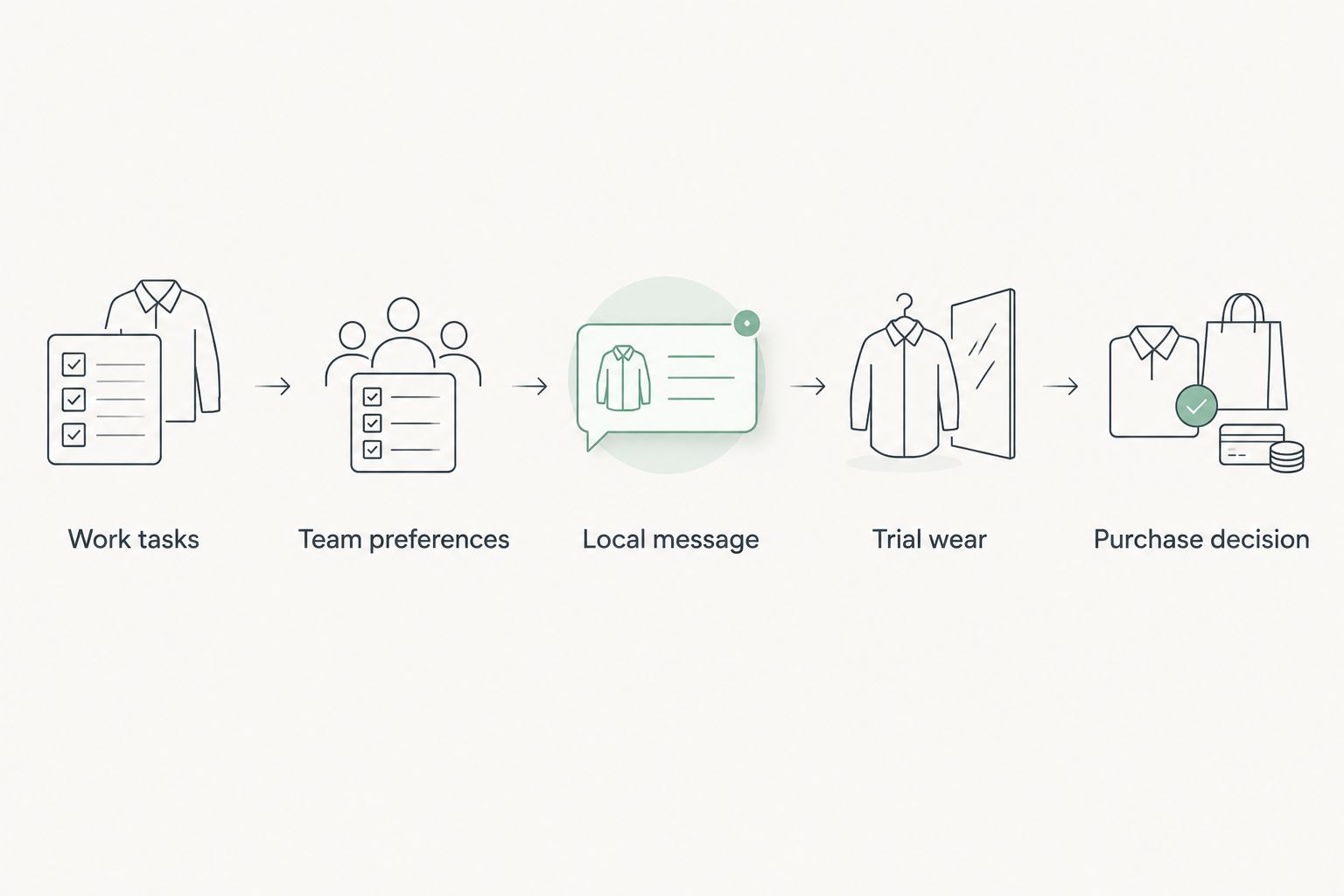
Keep the brief somewhere your team can review without needing a shopping account. A shared note or paper checklist is enough.
- Name the work setting: counter, appointments, outdoor booth, or back room.
- Separate local identity from employee identification.
- List clothing requirements your workplace already follows.
- Decide whether participation is optional or part of a workwear policy.
2. Ask your team what they will actually wear
Start with a short conversation or a basic form. Ask about garment type, preferred fit, and the messages employees feel comfortable wearing at work. Collect sizing information privately rather than asking people to announce it in a group.
Do not assume matching means everyone needs the same garment. You can establish a shared theme while allowing different silhouettes or layers. That decision belongs in your brief before you compare products.
Ask 3 questions: What tasks must the garment accommodate? Which garment type do you prefer? Are you comfortable wearing this message? These questions give you a practical basis for choosing without turning an owner’s personal taste into the only criterion.
Keep employee clothing preferences separate from public recovery messaging. Staff should understand exactly what the business intends a design to communicate.
- Ask about movement, layering, and existing workwear requirements.
- Collect each person’s size choice privately.
- Show the wording of a design before requesting agreement.
- Record an alternative for anyone who does not want the shared design.
3. Match the local message to your business context
Read every word on the garment, including the back. A place name, an expression of affection, and a statement about land or recovery communicate different positions. Choose deliberately rather than treating all Altadena graphics as interchangeable decoration.
Hardpressedgraphics apparel centers on Altadena/Dena themes, making it a relevant place to compare local wording after you define the purpose. The buying path is simpler than commissioning an original design when an existing message already fits. The limitation is equally clear: an existing design is not automatically your business identity or a customized uniform.
In 2026, keep recovery-related wording precise. Selling clothing to supporters of wildfire recovery does not establish that each purchase funds recovery. Do not turn a community-themed purchase into a donation claim unless explicit terms support it.
- Read front and back wording before selecting a design.
- Distinguish a place name from a statement of advocacy.
- Check that your team understands the message you choose.
- Remove donation language from your business caption unless verified.
4. Test the garment against a real workday
Begin with clothing you already own to identify practical requirements. Reach, bend, sit, and perform the movements your work involves. This costs nothing and helps you recognize what to examine in a prospective garment.
Before extending a choice across your team, assess 1 full work shift in a garment you can evaluate. This is a recommended trial, not a claim about any product’s performance. Check comfort, movement, and compatibility with the clothing or equipment your workplace requires.
For a 2026 team purchase, use the exact product information rather than transferring details from another listing. A cotton claim on one shirt does not establish the fabric of another. Follow the garment’s care label; do not infer washing instructions from the print or color.
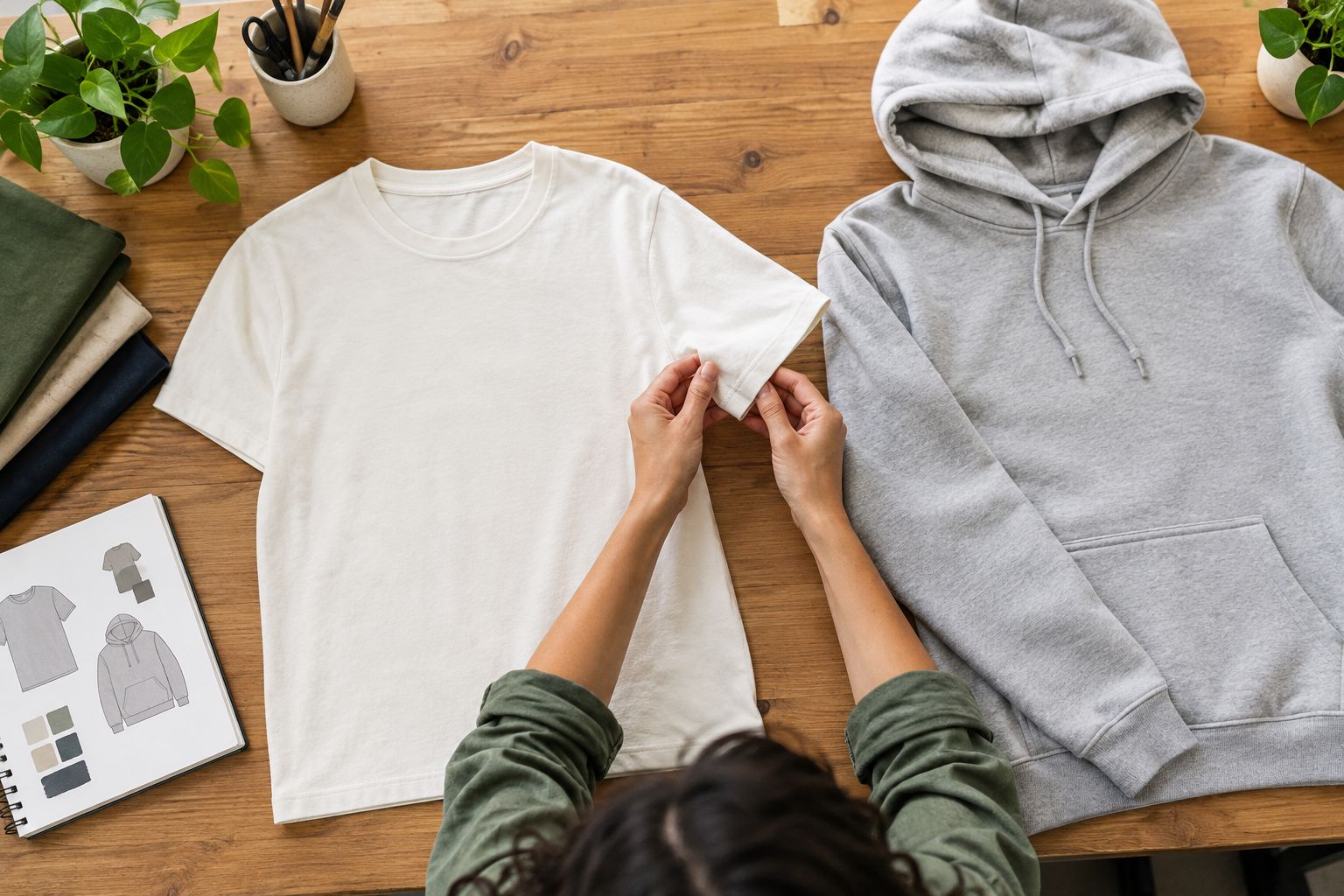
A photo can help you discuss appearance, but it cannot settle comfort. Use both observations when deciding whether the garment belongs in daily workwear or occasional event clothing.
- Test reaching, bending, and seated work where relevant.
- Check compatibility with required workplace clothing.
- Read the exact garment’s fabric and care information.
- Record what worked and what needs a different garment type.
5. Separate owner apparel, team apparel, and family purchases
Create distinct shopping lists before comparing items. Your personal shirt, a staff garment, and a child’s community-event outfit serve different users. Combining them makes it easier to select something with the right artwork but the wrong intended wearer.
The supplied Hardpressedgraphics Altadena clothing listings are labeled for kids. Those listings are relevant to children’s clothing, not evidence of adult team sizing. Do not use a kids’ product listing as the basis for an employee apparel order. Confirm an appropriate adult listing before making a staff selection.
Likewise, totes, tumblers, and notebooks are accessories, not substitutes for workwear. Consider them separately if your aim is to carry a local theme into everyday business use. Do not assume that an accessory has particular capacity, insulation, or construction without checking its own details.
- Keep owner, employee, and children’s selections on separate lists.
- Check the intended wearer in the exact product title.
- Verify adult sizing rather than extrapolating from kids’ listings.
- Evaluate accessories against their own purpose and product information.
6. Review the result before expanding the purchase
Start with a simple review note after wearing the garment. Record the task, the clothing choice, and any practical issue. You do not need a new system to decide whether a shirt suits counter work or belongs only in an occasional event outfit.
Take 2 photos, front and back, to review the visible message with your team. Keep permission and privacy in mind before publishing employee photos. Use the pictures to assess what is actually visible, not to make claims about customer response.
For your next 2026 purchase, keep the same decision criteria. A different design still needs a fit check, an intended wearer, and an accurate explanation. Expand only when the choice meets the brief you wrote at the start.
- Record feedback after actual use rather than relying on first impressions.
- Check that the message remains appropriate for the work setting.
- Separate comfort feedback from opinions about the graphic.
- Recheck product details before choosing a different garment.
Compare apparel options by the job they need to do
Choose the garment type before choosing the graphic. Each option below has a useful role and a clear limit. These are selection criteria, not claims about the construction of a particular product.
| Option | Best for | Practical advantage | Key limitation |
|---|---|---|---|
| Locally themed T-shirt | Owners who want a visible neighborhood message | Puts the local design on the main garment | Does not by itself distinguish staff from customers |
| Locally themed hoodie | Owners who want a themed outer layer | Keeps the message on the layer worn over other clothing | Requires a separate check for work-task suitability |
| Locally themed hat | Owners who prefer a headwear-based local detail | Adds a local reference without changing the main garment | Does not replace required workplace head protection |
| Existing workwear | Owners whose current clothing already meets the job requirements | Avoids changing a functional clothing setup | Does not add an Altadena-specific message unless it already has one |
A T-shirt is a sensible starting point when the main objective is a visible local graphic. Existing workwear is the better choice when the themed garment conflicts with the job. Neither option wins every situation.
Hardpressedgraphics apparel fits the local-design part of this comparison. Confirm the exact item’s intended wearer and details before treating it as business clothing. Do not assume that a retail apparel purchase includes a uniform program.
Common mistakes small business owners make
Treating neighborhood clothing as staff identification
An Altadena graphic names a place or expresses a message; it does not necessarily name your business. If customers must identify an employee, address that separately through your normal identification method rather than expecting a local design to do both jobs.
Choosing children’s listings for adult team planning
A design can look right while its listing serves the wrong wearer. Check the title and sizing information first. Keep children’s purchases for family use separate from adult workwear decisions, even when the artwork is similar.
Describing a purchase as a recovery donation
Supportive wording and donation terms are not interchangeable. Explain your own reason for wearing the garment without asserting that the purchase funds recovery. Any financial-benefit claim needs explicit supporting terms, not an inference from the theme.
Buying the graphic before checking the task
An appealing message cannot resolve a clothing conflict at work. Check movement, workplace requirements, and care information before choosing a team garment. If the design does not suit daily work, reserve it for an appropriate off-duty or event setting.
FAQ
What's the best Altadena apparel for small business owners?
The best Altadena apparel for small business owners is clothing that fits the work and carries a message the wearer supports. Choose the garment type first, then assess the local design and exact product details.
Is Hardpressedgraphics a custom business-uniform supplier?
Hardpressedgraphics is described as a Shopify-based apparel brand selling Altadena/Dena-themed clothing and accessories. Do not assume it offers custom logos, embroidery, or a business-uniform program without explicit confirmation.
Should my whole team wear the same Altadena shirt?
Matching shirts are not a prerequisite for expressing a shared local connection. Ask employees about fit, work requirements, and message preferences before choosing a common garment.
Can I use the kids' Altadena listings to order staff shirts?
Kids' Altadena listings are not a basis for selecting adult staff sizes. Find an appropriate adult listing and check its own sizing and product information before making a team choice.
Does buying Altadena apparel automatically donate to wildfire recovery?
Buying Altadena apparel does not automatically establish a donation to wildfire recovery. Only describe a purchase as funding recovery when explicit terms identify that arrangement.
Is a T-shirt or hoodie better for my small business?
A T-shirt suits a main-garment local message, while a hoodie puts the message on an outer layer. Choose according to your work setting, layering needs, and workplace clothing requirements.
What should I check before choosing apparel for employees?
Check the intended wearer, sizing information, message, fabric details, and care instructions for the exact garment. Ask employees about practical needs and evaluate the choice in a real work setting before expanding the purchase.
One last thing
The back of a shirt is part of your business-facing message too. Read it before approving a design, then use the same standard you would apply to wording on your counter or event sign.
For 2026, make your final check simple: does the garment suit the work, does the wearer support the message, and can your business explain it accurately? If any answer is no, change the selection rather than stretching the explanation.