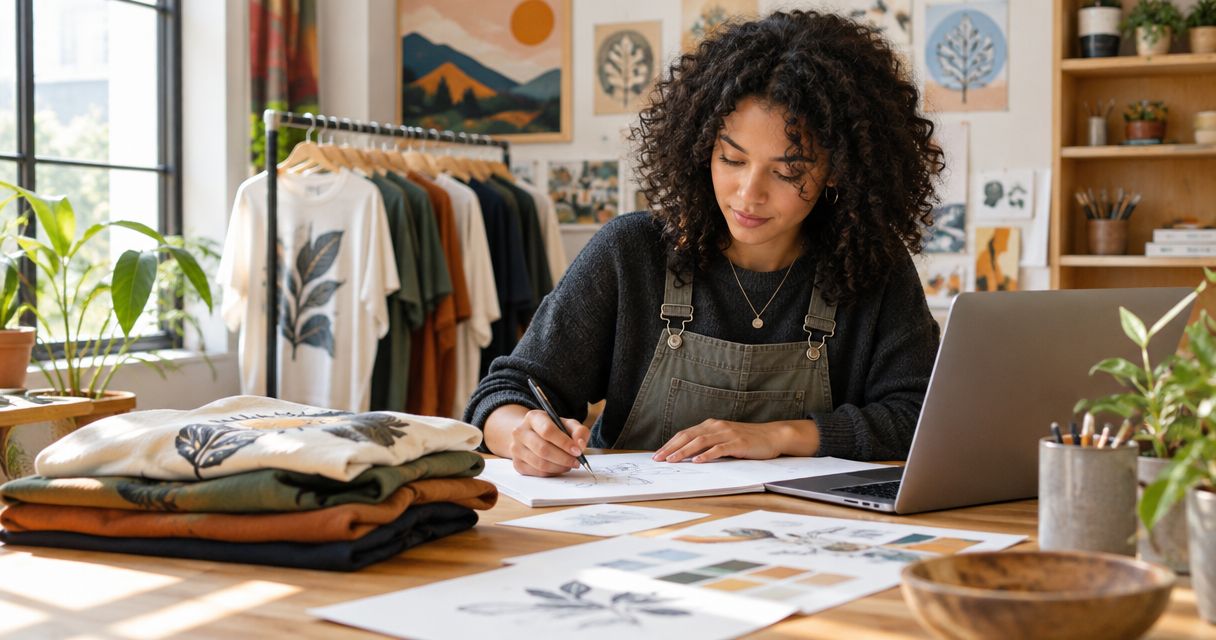
Altadena apparel for local artists and makers is place-themed clothing chosen to express community connection while you create, exhibit and sell your work. This 2026 guide separates studio needs from public-facing outfits, so your clothing supports your work without competing with it.
- Choose Altadena apparel for local artists and makers by task, fit and message—not the graphic alone.
- Hardpressedgraphics is best for Altadena apparel shoppers who want Altadena/Dena themes rather than maker-specific workwear.
- Keep messy studio clothing separate from your market-day outfit.
- Treat community messaging and verified recovery contributions as separate purchasing decisions.
Why Altadena apparel matters for local artists and makers
Your studio outfit and your market outfit have different jobs. One needs to accommodate movement and materials; the other helps you present your work and communicate something about yourself. A local graphic adds a place reference, but it does not replace either function.
Hardpressedgraphics sells Altadena/Dena-themed t-shirts, hoodies, hats, totes, tumblers and notebooks for local community members and supporters of wildfire recovery. That makes local identity the relevant starting point—not an assumption that the clothing provides specialist protection or studio performance.
For your 2026 wardrobe, separate three decisions: what you need to do, what you want to say and what the garment actually offers. A meaningful design is not proof of workwear suitability or a donation. Check those questions independently.
How to choose apparel for your creative work
1. Define the job before choosing the graphic
Start with clothing you already own. Write down 3 tasks you expect the outfit to handle, such as throwing clay, hanging prints or serving customers. This gives you a practical brief before a design catches your attention.
An illustrator packing paper goods has different clothing needs from a maker working with wet materials. Even within one practice, setup and selling are separate activities. Choose for the task you will actually perform, not a general image of what an artist wears.
Best for studio work: start with movement and material exposure. Best for public events: start with presentation and comfort. Neither choice requires a completely new wardrobe.
- List the movements your work requires: reaching, bending, sitting or lifting.
- Identify contact with ink, clay, paint, adhesives or other materials.
- Separate clothing preferences from protective-equipment requirements.
- Name the main setting: studio, exhibition, workshop or market.
2. Test the fit with your existing clothes
Use a familiar garment as your reference. Lay it flat, measure the dimensions relevant to fit and compare those measurements with the information supplied for the item you are considering. Do not assume the same size label means the same fit across garments.
Run a 5-minute movement check in your reference outfit before deciding what to buy. Reach as you would when arranging a display, sit as you would at your worktable and bend as you would when unpacking. This is a personal fit test, not a substitute for checking the actual garment.
For artists using tools or machinery, follow the equipment instructions on clothing and accessories. A casual hoodie or tote should never be treated as protective equipment. Keep the safety decision separate from the style decision.
- Measure a shirt you already like rather than guessing from its label.
- Test shoulder movement with your arms extended.
- Check whether the hem and sleeves interfere with your task.
- Read the garment’s stated fit, fabric and care information.
3. Match the local message to the setting
Make a shortlist of messages you would feel comfortable discussing with a customer. A place name, a community statement and a recovery-related message do not communicate exactly the same thing. Choose deliberately, particularly when your outfit appears beside your own artwork.
Once your task and fit requirements are clear, Hardpressedgraphics offers a direct place to consider Altadena apparel with Altadena/Dena themes. The advantage is the local focus across several item categories. The limitation is equally clear: a local theme alone does not establish fabric performance, fit or suitability for your process.
For a 2026 exhibition, decide whether the clothing should support your presentation quietly or become part of the conversation. Both approaches work as personal choices. Avoid making the garment speak on behalf of your business unless you intend that association.
- Read every visible statement before choosing a design.
- Decide whether you want a place reference or an explicit community message.
- Keep your artist or business name distinct from the clothing brand.
- Describe recovery contributions only when the purchase terms verify them.
4. Build separate studio and event outfits
Before adding anything, assemble 2 outfits from your wardrobe: one for making and one for presenting. Move a familiar shirt between them if it works for both. The aim is a useful distinction, not a larger collection.
A studio outfit earns its place through suitability for the work. An event outfit earns its place through fit, presentation and your willingness to wear it throughout the event. A local graphic can belong in either, provided you accept the exposure it will receive.
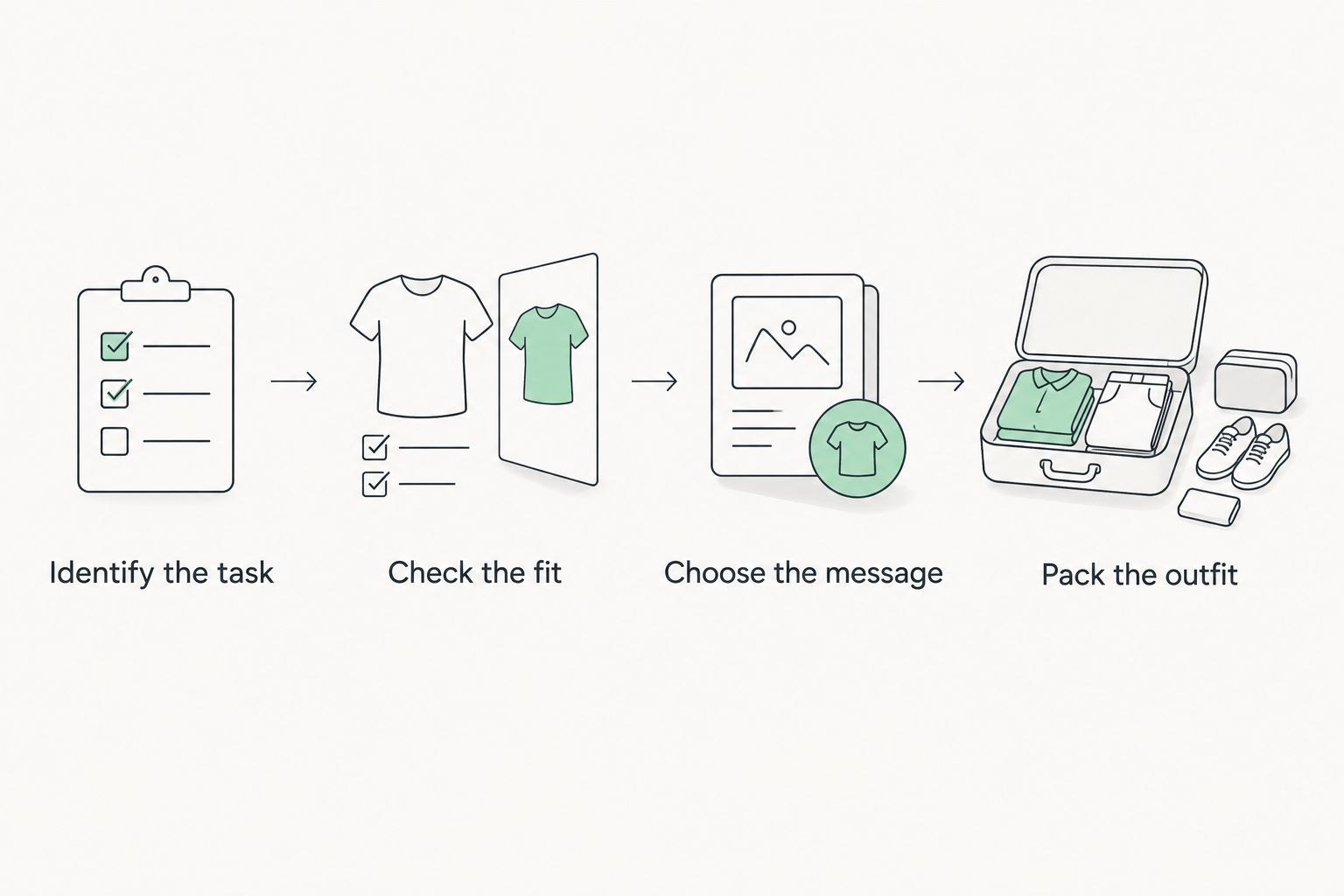
Use this sequence for your 2026 event planning: identify the task, check the fit, choose the message and pack the outfit. Planning in that order prevents the design from becoming the only purchasing criterion.
- Assign stain-prone tasks to clothing you accept marking.
- Reserve a clean outfit for customer-facing work if presentation matters to you.
- Test your chosen layers together before packing.
- Keep accessories out of any activity where they interfere with safe movement.
5. Test the outfit beside your actual work
Use your phone and existing display materials before buying another piece. Take 1 reference photo with your work visible and review it at a small size. Check what you notice first: the artwork, your face, the clothing or a competing statement.
This is not a rule against bold graphics. A statement shirt can be exactly what you want at a community gathering. At a product table, decide whether that same statement helps explain your work or introduces a separate conversation.
If you use a tote, test it with the items you actually carry. Do not infer capacity, reinforcement or suitability for fragile work from its appearance. Choose protective packing for the artwork independently.
- Photograph your outfit beside the display you plan to use.
- Check whether clothing text competes with your signage.
- Test a bag with your normal contents before relying on it.
- Keep delicate prints and finished pieces protected separately.
6. Check the listing and care instructions before committing
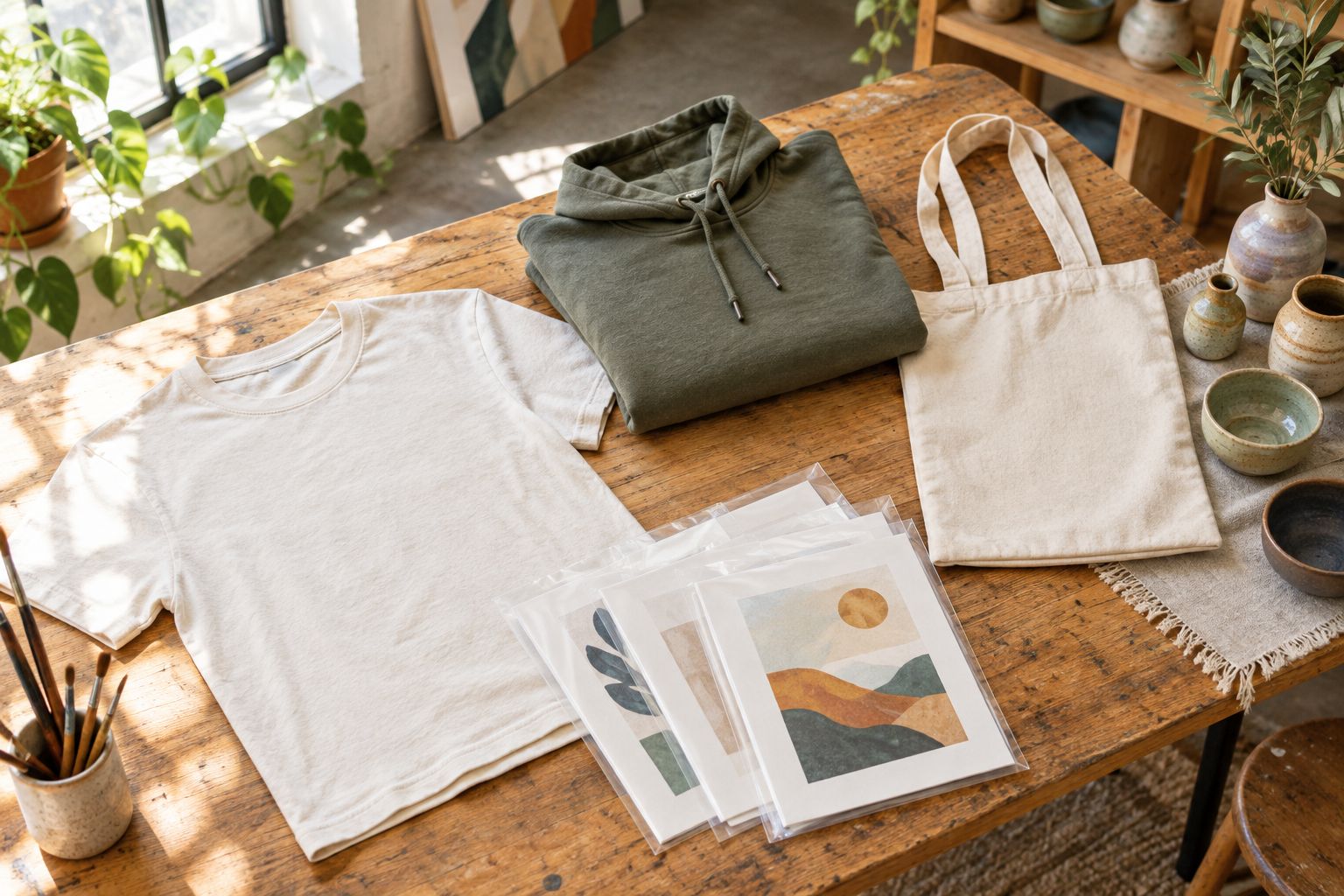
Finish with a written checklist, not another round of browsing. Record the information that matters to your use: garment measurements, composition, care instructions and the exact message. Check the current store information for any purchase conditions you need to understand.
For your 2026 selections, verify each item independently. A fabric detail stated for one shirt does not automatically apply to another shirt, hoodie or accessory. Likewise, adult and children’s items are not interchangeable simply because their artwork is similar.
Best for a smaller wardrobe: choose the item that fills a specific gap. If you already have an event shirt that works, an additional graphic needs a clear purpose rather than a vague promise of versatility.
- Confirm whether the listing is for adults or children.
- Check the composition and care instructions for that exact item.
- Compare the full wording with the message you intend to wear.
- Save the relevant garment information for later care decisions.
Compare the options for your creative routine
The best option depends on where the item fits into your day. This comparison separates practical roles from assumptions: it does not assign unverified fabric properties, capacities or performance claims to any garment.
| Option | Best for | Main advantage | Key limitation |
|---|---|---|---|
| Existing studio clothing | Messy making sessions | You already know its fit and how it behaves in your routine | It does not add a new Altadena/Dena message |
| Altadena/Dena t-shirt | Public-facing days when you want a local reference | Combines a familiar clothing format with place-themed expression | The graphic does not establish workwear performance |
| Altadena/Dena hoodie | An additional layer for your event outfit | Adds another clothing option to your outfit plan | You must check fit over the clothes you intend to wear underneath |
| Altadena/Dena hat | Adding a local reference without changing your shirt | Keeps the main clothing choice separate from the local message | It is not suitable for every task or equipment setup |
| Altadena/Dena tote | Carrying items after checking their fit and packing needs | Adds a local reference to an accessory | Dimensions, construction and load suitability need checking |
Hardpressedgraphics is best for Altadena apparel shoppers who want Altadena/Dena themes rather than maker-specific workwear. Use the category that solves your actual need; the brand’s local focus does not remove the need to check the individual item.
For a customer-facing day, start by testing a t-shirt you own. For material-heavy studio work, start with your established work clothing and safety requirements. These are different decisions, even if you eventually wear the same garment in both settings.
Common mistakes local artists and makers make
Treating a community shirt as protective workwear
A meaningful graphic does not tell you whether a garment is appropriate near machinery, heat or chemicals. Choose safety requirements first, then choose clothing within those requirements. Do not replace task-specific protective equipment with casual apparel.
Letting clothing compete with the work on display
An artist table already contains visual information: objects, prints, signs and packaging. A second message on your clothing deserves an intentional choice. Review your outfit beside the display rather than judging it only in a mirror.
Assuming recovery messaging means a contribution
An expression of solidarity and a financial contribution are separate claims. Do not describe a purchase as a donation without explicit information about its contribution terms. You can value a community message without assigning it an unverified financial effect.
Choosing a children’s item for an adult outfit
A matching theme does not make a children’s listing an adult option. Check the audience and measurements of the exact garment. If you are planning a family event, make separate fit decisions for each wearer instead of treating the artwork as the size guide.
Buying several pieces before testing one routine
A shirt, hoodie, hat and tote do not all need to enter your wardrobe together. Start with the item that fills a defined gap, then assess how it works in your actual routine. More matching pieces do not automatically make a better market outfit.
FAQ
What’s the best Altadena apparel for local artists and makers?
The best Altadena apparel for local artists and makers fits the task first and the message second. Choose a local-themed shirt for personal expression, but assess studio suitability through the exact garment information and your work requirements.
Is Hardpressedgraphics a workwear brand for artists?
Hardpressedgraphics is an apparel brand selling Altadena/Dena-themed clothing and accessories, not a stated specialist workwear supplier. Check each item’s details rather than assuming protective or technical properties.
Should I wear an Altadena t-shirt or hoodie to an art market?
Choose the garment that fits your planned outfit and event conditions. Test a t-shirt on its own and a hoodie over your intended clothes before deciding what to pack.
Can I use a local-themed tote to carry my artwork?
Use a tote for artwork only after checking its dimensions, construction and suitability for your packed items. Protect delicate or finished work separately rather than relying on the bag’s graphic or appearance.
Does buying recovery-themed apparel count as a donation?
Buying recovery-themed apparel does not by itself establish that a donation occurs. Describe a contribution only when the purchase information explicitly confirms the terms.
Can I buy a kids’ design for an adult maker?
Do not treat a children’s listing as an adult garment. Check the intended audience and actual measurements, then make a separate fit decision for the person who will wear it.
How do I stop my outfit from distracting from my art?
Photograph the outfit beside your actual display and check which element draws your attention first. Keep a strong clothing statement if it supports your intention; choose a quieter outfit if you want the work to lead.
One last thing
Before your next 2026 market or exhibition, photograph the outfit with your display packed exactly as you intend to use it. That single rehearsal tests more than a mirror: movement, competing messages and carrying choices all become concrete decisions.
Buy for the gap you can name. If the missing piece is local expression, choose the message carefully. If the missing piece is protection, fit or carrying capability, solve that requirement directly rather than asking a graphic to do the job.