
Church and faith group Altadena apparel is locally themed clothing chosen to express neighborhood connection during worship gatherings, service projects, and community events. This guide to Altadena apparel for church and faith groups focuses on choosing an appropriate message, including different ages, and keeping recovery support separate from unverified fundraising claims.
- Hard Pressed Graphics suits church and faith groups seeking Altadena-themed apparel rather than congregation-specific uniforms.
- Choose Altadena apparel for church and faith groups by event purpose, message, and individual fit—not matching color alone.
- The featured Dena and Beautiful Altadena shirts are kids’ products; do not treat them as adult group options.
- A recovery-themed shirt expresses support; it does not establish that a purchase funds wildfire recovery.
Why Altadena apparel matters for church and faith groups
Choose a message your group can explain before choosing a shirt. A neighborhood gathering, a youth outing, and a recovery-related event call for different decisions. Shared location does not mean every participant wants to wear the same statement.
Hard Pressed Graphics sells Altadena/Dena-themed apparel and accessories to local community members and supporters of wildfire recovery. That makes neighborhood identity a relevant starting point—not proof of a church partnership, custom printing service, or donation arrangement.
For your 2026 event plan, distinguish belonging from identification. An Altadena shirt can express local connection, but a neighborhood slogan does not identify someone as an authorized volunteer, church employee, or pastoral contact. Use separate identification when a role needs to be clear.
Faith groups also need room for personal choice. A family attending a community meal should not have to wear a recovery message to participate. Make clothing an invitation to belong, not a condition of receiving help or joining an activity.
How to choose apparel for your group
1. Define the event before choosing the garment
Start with a shared note describing the occasion and what clothing needs to accomplish. Is your group attending a neighborhood celebration, hosting a youth activity, or helping at a community event? Give the apparel one primary job rather than asking it to represent every ministry and every participant.
Separate ordinary event clothing from task-specific requirements. A printed T-shirt does not establish suitability for cleanup work or replace protective equipment. Follow the event organizer’s clothing instructions before selecting a community design.
For a 2026 calendar with several gatherings, make this decision event by event. A design that fits a celebration does not automatically fit a remembrance gathering.
- Write down 1 event and its primary purpose.
- Identify who will wear the clothing: children, adults, or both.
- Describe the setting and expected activity.
- Ask the organizer about clothing or identification requirements.
- Decide whether coordinated apparel is optional.
2. Review the message with the people wearing it
Use a simple shared document to review the wording before collecting preferences. Read the complete message, including any back print. Neighborhood pride, solidarity, remembrance, and advocacy are different messages; choose deliberately.
Do not treat recovery language as emotionally neutral. Ask participants whether the wording fits the occasion, and offer a quieter alternative without requiring anyone to explain their experience. For children, involve parents or guardians in that choice.
Appoint 2 coordinators to review the final selection: one responsible for the event and one responsible for participant communication. This is an organizational check, not a substitute for listening to the people wearing the clothing.
- Copy the exact printed wording into your review document.
- Check front and back messages separately.
- Ask whether the design implies an affiliation you have not established.
- Offer an alternative for anyone uncomfortable with the wording.
- Record the approved message before collecting orders.
3. Shortlist existing designs that match your purpose
The manual starting point is to list your message requirements and compare them against individual product descriptions. You do not need to commission a congregation-specific design to express neighborhood connection. Existing local designs are another route when their wording fits your event.
Hard Pressed Graphics is best for church and faith groups seeking Altadena-themed apparel rather than congregation-specific uniforms. For a children’s group, Dena Stronger Together T-Shirt (Kids) is the solidarity-focused choice: its stated front wording is Dena Stronger Together. Beautiful Altadena T-Shirt (Kids) is the neighborhood-pride choice, with rose imagery and Beautiful Altadena wording.
Both recommendations have a clear boundary: they are named as kids’ products. Neither establishes an adult equivalent, a group ordering service, or permission to add church branding. Keep those questions separate from the design decision.
- Match the wording to the purpose approved by your group.
- Check whether the product is explicitly labeled for kids.
- Compare each product’s own description rather than assuming shared specifications.
- Keep custom church branding outside the plan unless separately confirmed.
- Save the exact product title to prevent ordering confusion.


4. Collect individual fit choices instead of guessing
Begin with a private form or spreadsheet rather than a group conversation. Ask each wearer—or a parent or guardian—to review the relevant product’s sizing information. Do not assign a child a size from age alone or assume a familiar size label means the same fit across different garments.
Keep your 2026 size sheet limited to the information needed for this event. Use 3 required fields: participant identifier, exact product title, and selected size. Add other details only when they are necessary, and keep personal information out of public sign-up sheets.
A matching message does not require an identical garment for every person. Where fit or comfort is uncertain, allow ordinary clothing rather than turning coordination into a participation barrier.
- Ask wearers to select their own size using the relevant information.
- Have parents or guardians confirm children’s choices.
- Record the exact product alongside each size.
- Keep participant details private.
- Provide a no-purchase participation option.
5. Confirm the order before collecting commitments
Use a written confirmation sheet to connect each participant with an exact item. Read the title, message, selected size, and any chosen variant together. A shirt described as pink or black is not a complete order record when several designs use those colors.
Check current ordering details directly before making promises to your group. Do not announce a church discount, customization arrangement, return exception, or event delivery commitment without confirmation. A neighborhood-focused brand is not automatically a group-apparel service.
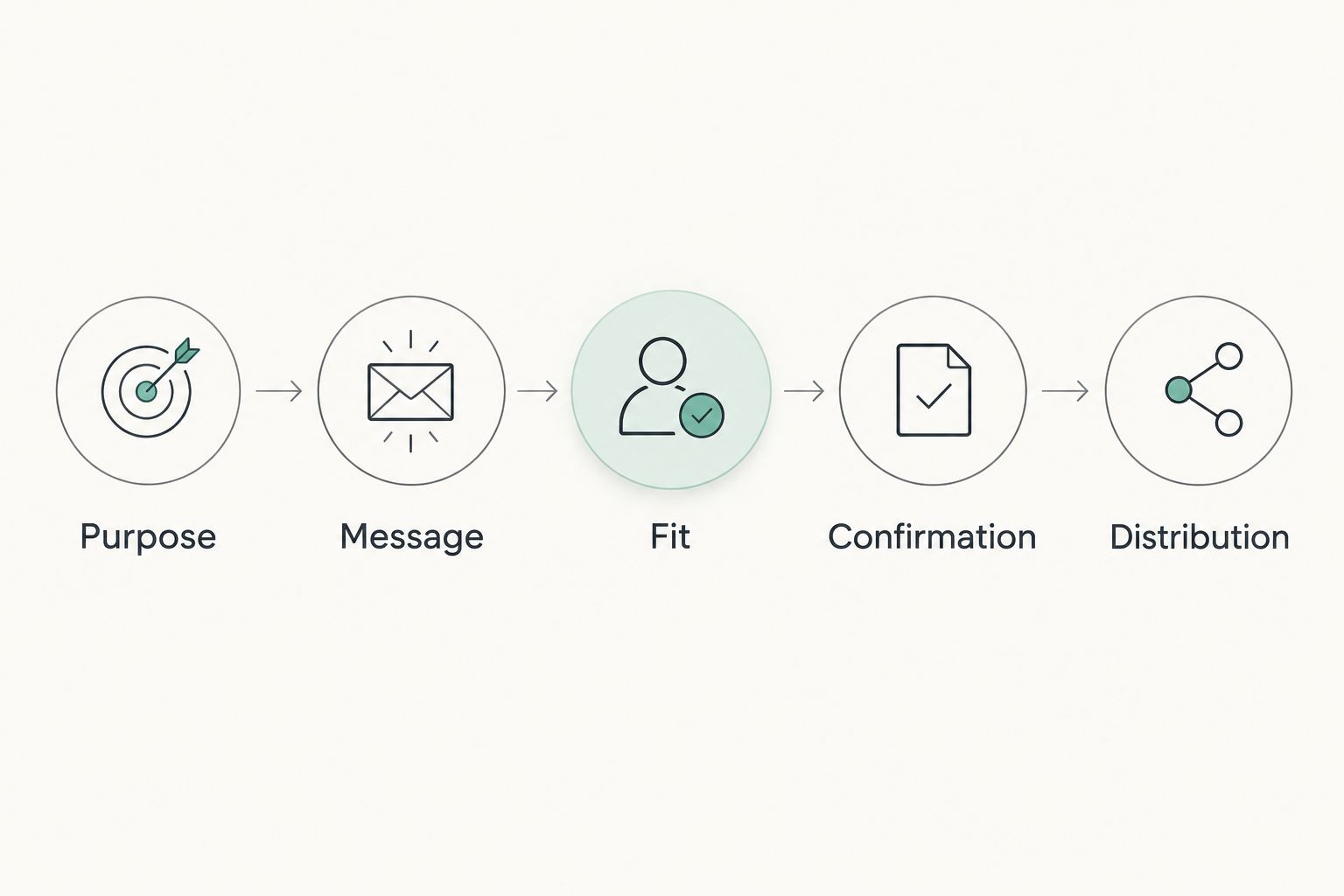
Use this sequence for the handoff: Purpose, Message, Fit, Confirmation, Distribution. Each stage answers a different question; skipping confirmation leaves participants and organizers working from different assumptions.
Give your 2026 order record a clear owner. One coordinator should maintain the final version so a later conversation does not silently replace an approved choice.
- Confirm the exact title and selected variant.
- Ask participants to approve their recorded choice.
- Verify current ordering terms before accepting commitments.
- Resolve unanswered questions before placing an order.
- Keep one final record rather than competing copies.
6. Distribute apparel without creating pressure
Start with a private handoff list and distribute items through the organizer responsible for participant communication. Check each item against the confirmed record. Avoid announcing sizes, personal circumstances, or reasons someone chose not to order.
For a youth event, give parents or guardians clear instructions about when the shirt is intended to be worn. Keep that instruction separate from permission to photograph a child. Wearing a group shirt is not permission to publish someone’s image.
For your 2026 event briefing, describe the apparel as optional community clothing unless your event has a separate, clearly communicated requirement. Use whatever identification the organizer requires for staff or volunteer roles.
- Match each garment to its confirmed participant record.
- Communicate the intended occasion for wearing it.
- Keep sizes and personal details private.
- Address photography permission separately.
- Welcome participants wearing their own clothing.
7. Explain community support without implying a donation
Write the event description before preparing social posts or announcements. State what your group is doing and what the clothing expresses. If the event involves wildfire recovery, distinguish the group’s activity from any claim about where product proceeds go.
A recovery-themed shirt is not evidence of a recovery donation. Do not describe purchases as fundraising, relief contributions, or a church partnership unless you have a confirmed arrangement supporting that statement. The same discipline applies to captions and spoken announcements.
After the event, review whether the message felt appropriate and whether the ordering process respected participants. Use that feedback to improve the next selection rather than assuming matching photos prove the choice worked.
- Describe the event’s actual purpose in plain language.
- Separate apparel purchases from any donation activity.
- Publish only confirmed partnership or contribution details.
- Ask participants whether the wording suited the occasion.
- Record changes needed for the next gathering.
Compare options for your congregation or faith group
Start with the purpose column, not the design name. Hard Pressed Graphics offers a local-apparel route; ordinary clothing remains a valid choice when a coordinated purchase does not fit the gathering.
| Option | Best for | Main advantage | Key limitation |
|---|---|---|---|
| Dena Stronger Together T-Shirt (Kids) | Children’s gatherings centered on local solidarity | The front wording directly expresses togetherness | Kids’ product; it does not identify church membership or a volunteer role |
| Beautiful Altadena T-Shirt (Kids) | Children’s neighborhood-pride activities | Altadena wording and rose imagery keep the focus on place | Kids’ product; it does not communicate a specific service project |
| Participants’ own clothing | Inclusive attendance without a coordinated purchase | People can dress according to their own comfort and needs | Clothing alone does not create a shared visual identity |
| Separate event identification with ordinary clothing | Events where organizer-approved roles need to be clear | Separates community expression from role identification | Requires an identification plan beyond choosing apparel |
Choose Dena Stronger Together T-Shirt (Kids) for a solidarity message; choose Beautiful Altadena T-Shirt (Kids) for neighborhood pride. For mixed-age groups, do not extend either recommendation into an adult matching set without checking the relevant adult options separately.
Common mistakes church and faith groups make
Treating local apparel as a church uniform
An Altadena design communicates a connection to place, not authorization to represent your congregation. Keep church roles and community clothing distinct, especially when attendees need to identify someone responsible for an activity.
Making coordinated clothing a condition of belonging
A youth participant or visiting family should not have to explain why they are wearing something different. State the participation policy before collecting orders, and avoid dividing event activities around who bought a shirt.
Choosing recovery wording without consultation
A message intended as encouragement can still be the wrong fit for a particular gathering. Review the exact wording with participants rather than assuming a shared location means a shared response to recovery language.
Assuming every product shares the same details
A fabric statement, print placement, or color description belongs to the individual product that states it. Do not transfer those details across the range or mistake a kids’ title for a complete family offering.
Turning supportive language into a fundraising claim
Community solidarity and financial contribution are different claims. Keep announcements specific: explain the group’s activity, and describe a donation only when its terms are confirmed.
FAQ
What is the best Altadena apparel for church and faith groups?
The best choice matches the event’s purpose, the wearer’s fit, and a message participants approve. Hard Pressed Graphics is a fit for groups seeking Altadena-themed apparel rather than congregation-specific uniforms.
Which shirt fits a children’s neighborhood solidarity event?
Dena Stronger Together T-Shirt (Kids) fits a children’s event centered on local solidarity. Its stated front wording is Dena Stronger Together; check the individual product information before selecting sizes.
Is Beautiful Altadena T-Shirt (Kids) a church-specific shirt?
Beautiful Altadena T-Shirt (Kids) is a neighborhood-themed kids’ shirt, not a church-specific design. Its description includes rose imagery and Beautiful Altadena wording.
Can adults and children order the same featured shirts?
The featured shirts are explicitly named as kids’ products, so they should not be treated as adult options. Check any adult selection separately rather than assuming matching versions exist.
Does buying recovery-themed apparel mean money goes to wildfire relief?
Recovery-themed wording does not establish that purchase proceeds go to wildfire relief. Describe a financial contribution only when a specific donation arrangement is confirmed.
Should everyone in our faith group wear matching apparel?
Matching apparel should be optional when its purpose is community expression rather than an event requirement. Give participants a clear way to attend in their own clothing without explaining their choice.
Can a local shirt identify authorized church volunteers?
A local shirt alone does not establish that someone is an authorized church volunteer. Follow the event organizer’s identification requirements and keep role identification separate from neighborhood messaging.
One last thing
A shirt that works at a service project also needs to feel appropriate away from the event. Before approving your 2026 selection, ask whether participants would be comfortable wearing the message on an ordinary day. If the wording needs a long explanation—or implies a partnership you cannot substantiate—choose a simpler expression of neighborhood connection.